What Is Root Canal Treatment?
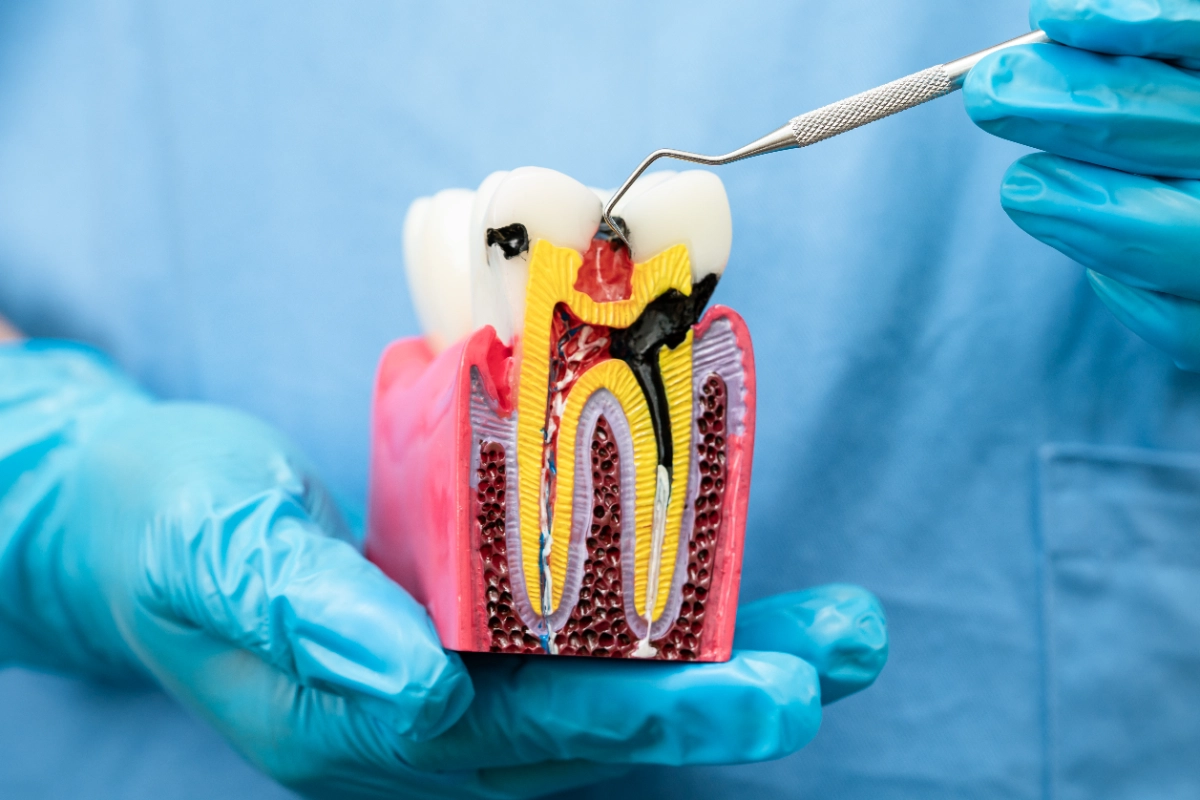
Inside each tooth is a soft tissue called the pulp. If bacteria reach the pulp through deep decay, a crack or trauma, it can become inflamed or infected. Left untreated this can cause pain, an abscess and loss of surrounding bone.
Root canal treatment involves accessing the pulp chamber, removing the affected tissue, cleaning and shaping the canals, disinfecting them and then filling and sealing them. It is carried out under local anaesthetic, usually over one or more appointments.
A tooth that has had root canal treatment is more brittle than a healthy tooth, so a crown or other substantial restoration is often recommended afterwards to reduce the risk of fracture.
When Root Canal Treatment May Be Considered
Root canal treatment may be discussed where there is:
Root canal treatment is not always possible or appropriate. Where a tooth is severely broken down, cracked through the root, or lacks adequate bone support, extraction may be recommended instead. Both options and their consequences are discussed at consultation.
The Treatment Process
What root canal treatment generally involves at our Brunswick practice.
An examination, testing of the tooth and radiographs to confirm the diagnosis and assess whether the tooth can be predictably treated and restored.
Under local anaesthetic and with the tooth isolated, the pulp is removed and the canals are cleaned, shaped and disinfected. A dressing and temporary filling may be placed.
Once the canals are clean and symptoms have settled, they are filled and sealed to prevent bacteria re-entering the root system.
A permanent restoration, often a crown, is placed to protect the weakened tooth. Reviews and radiographs monitor healing over time.
Root Canal Treatment And Extraction Compared
General information only. The appropriate option depends on your individual clinical circumstances.
Why Root Canal Treatment May Be Recommended
Where a tooth can be predictably treated and restored, root canal treatment may:
Outcomes vary between individuals and depend on your clinical circumstances, your oral health and how closely aftercare instructions are followed. No particular result can be guaranteed.
Risks And Considerations
Root canal treatment carries risks and limitations, including:
Your practitioner will discuss the risks relevant to your circumstances, along with the alternatives and their associated risks, before any treatment begins.
After Root Canal Treatment
Patients are generally advised to:
Instructions are tailored to your individual treatment plan. If you have concerns after treatment, contact the practice for assessment.
Why Choose Brunswick Dental Practice For Root Canal Treatment?
Our Brunswick practice provides root canal treatment as part of a broader range of general and cosmetic dental services, with referral to a specialist endodontist where that is the better course.
BOOK AN APPOINTMENT
Examination, testing and radiographs confirm the diagnosis and whether the tooth can be predictably treated and restored.
You receive a written treatment plan and an itemised quote before any treatment begins, so the fees are clear up front.
Payment plan options can be discussed at your consultation. Terms and conditions apply.
The option of removing the tooth, and what replacing it would involve, is set out alongside root canal treatment.
Where a case is complex or retreatment is involved, referral to a specialist endodontist is arranged.
Fees, Health Funds And Payment
Fees for root canal treatment vary according to the tooth involved, the number of canals, the number of appointments required and the final restoration.
A written treatment plan and itemised quote are provided following your consultation, before treatment begins.
Health fund rebates may apply depending on your level of cover — check directly with your fund.
Payment plan options can be discussed at your consultation; terms and conditions apply.


We accept all health funds and are a preferred provider for NIB.
Frequently Asked Questions
The tooth is numbed with local anaesthetic, so the procedure itself should not be painful. Tenderness for a few days afterwards is common and is managed with pain relief as advised.
Some teeth are completed in one visit, others need two or more, depending on the tooth and whether infection is present. Your practitioner will advise for your case.
Not always, but a treated tooth is more brittle and back teeth in particular are usually crowned to reduce the risk of fracture. This is discussed as part of your plan.
It has a generally favourable outcome, but success cannot be guaranteed. Some teeth need retreatment, surgery, or eventually extraction.
Extraction is an alternative. It is usually quicker and cheaper initially, but leaves a space that may need replacing later. Both options are discussed at consultation.
Treated teeth can darken over time. Options such as internal whitening, a veneer or a crown can be discussed if this occurs.
Not routinely. Antibiotics are prescribed only where clinically indicated; they do not substitute for treating the source of the infection.
Untreated pulp infection does not resolve on its own. It can lead to increasing pain, abscess formation, loss of surrounding bone and eventual loss of the tooth.
Book A Consultation
If you have toothache, swelling or a tooth that has been diagnosed as needing root canal treatment, contact our Brunswick practice to arrange an assessment. Your practitioner will examine the tooth, review radiographs and discuss the suitable options, their risks and the alternatives, including extraction.
Call (03) 9386 7981 or use the enquiry form above. All treatment is provided by registered dental practitioners in accordance with Australian professional standards.
BOOK ONLINE
The information on this page is general in nature and is not a substitute for individual clinical advice. Any dental procedure carries risks. Speak with a registered dental practitioner about your individual circumstances before deciding on treatment.
© 2026 Brunswick Dental Practice