


Dentures that once felt secure can slowly start to feel different. Maybe there’s a click when you talk, a sore spot after lunch, or a wobble when you laugh. If that sounds familiar, it may be time to ask about denture relining.
In this article, we’ll explain why dentures can stop fitting and which signs to look out for. We’ll also cover what relining and adjusting involve, so you can feel confident about your next steps.
Why Dentures Can Stop Fitting Well
Dentures are made to match your mouth at one point in time. Your gums don’t stay the same, though. The Better Health Channel notes that gums change with age. As a result, all dentures may need relining or replacing after a period of time.
Timing can also depend on how your dentures were made. After teeth are removed, bone changes may loosen an immediate denture over time. It may then need adjusting and relining within a few months. If you wear a partial denture, your remaining teeth and gums also need to be healthy enough to support it.
Heat can play a part too. The Better Health Channel warns that hot water can change the shape and fit of a denture.
That’s why regular checks matter. Healthdirect advises seeing your dentist or dental prosthetist at least yearly to check that your dentures still fit correctly. It also advises brushing your gums and tongue every day, even without natural teeth, and keeping up regular dental checks.
Common Signs You May Need Denture Adjustment
Loose dentures are one sign, but not the only one. Ill-fitting dentures can show up in different ways, and some creep in slowly. According to the Better Health Channel and Healthdirect, it’s worth seeing your dental practitioner if you notice any of these:
- Dentures that feel loose, awkward or uncomfortable
- A sore spot where the denture presses on your gums
- Bleeding gums or swelling
- Ulcers that last more than two weeks
- Soreness or cracks at the corners of your mouth
- Eating or speaking difficulties that don’t improve after a few weeks
These signs don’t always mean you need a reline. Healthdirect notes that with a sore mouth, bleeding gums, swelling or ulcers, your dentures may need to be adjusted. Sometimes a small change can ease a pressure spot. Our dentist will assess whether relining, adjustment or replacement is required.
Normal Adjustment or a Fit Problem?
If your dentures are new, some strangeness is expected. Healthdirect says most people take a few months to get used to a new set. In that time, dentures may feel awkward or loose, cause some soreness, or lead to extra saliva. The Better Health Channel adds that you might hear a click when you talk.
So how can you tell settling in from a fit problem? The Better Health Channel suggests seeing your dental practitioner if difficulties haven’t improved after a few weeks. Pain, bleeding gums, swelling or ulcers are also reasons to book in sooner. If you’ve worn the same set for years, loose dentures that once felt secure are worth a check too.
What Is Denture Relining?
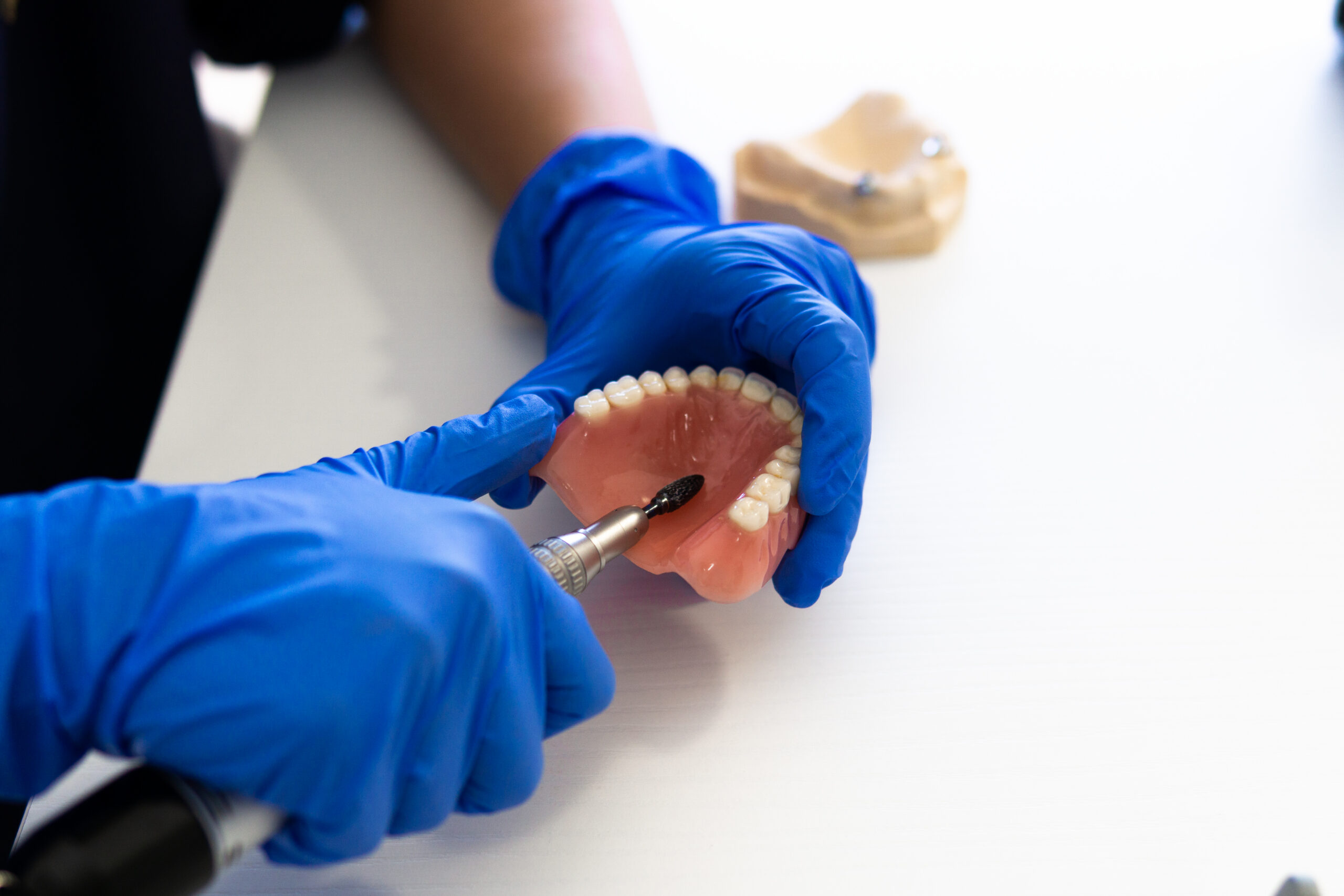
Denture relining is a way of improving how a denture fits. In simple terms, the inside surface that rests on your gums is reshaped. This helps it follow the current shape of your mouth. Because it works with your existing denture, a denture reline may be one option when the fit has changed.
A reline is different from an adjustment. An adjustment is usually a small change that eases a pressure point, while relining dentures reshapes the whole inside surface. Which option suits you depends on an individual assessment.
Related: Oral Hygiene With Dentures: Caring for Your Mouth and Your Appliance
What to Expect at a Denture Consultation
When you visit our Brunswick clinic, your appointment may include a review of your medical and dental history. We’ll also examine your mouth and talk through your treatment options. Your dentures are assessed by a registered dental practitioner, and any recommendation is based on your individual oral health.
Depending on what we find, we may suggest a small adjustment or relining. In some cases, replacement may be discussed. Follow-up appointments may be arranged to fine-tune fit and comfort, because dentures can need further changes as your mouth adapts.
What to Do if Your Dentures Feel Loose or Sore
A few simple steps can help while you arrange an appointment:
- Book a review soon. The Better Health Channel advises returning to your clinic as soon as possible if a denture causes a sore spot.
- Wear your dentures for a few hours before you come in. This lets us see where an adjustment is needed, as Dental Health Services Victoria suggests.
- Take them out for part of the day if the soreness is severe.
- Leave adjustments to us, and don’t try to bend, repair or modify your dentures yourself.
- Stop wearing a damaged denture and call us for an appointment.
- Skip hot water when cleaning, because it can change the shape and fit.
- Keep up your daily routine, cleaning your dentures and taking them out at night.
The Better Health Channel also notes that some people need denture glue, especially if their bone is thin. If you need more than you used to, please tell us.
Keeping Dentures Comfortable as Your Mouth Changes
Denture relining may be one way to bring a loose or sore denture back into line with your gums. The first step is knowing the signs. Watch for looseness, sore spots, bleeding or ulcers, and mention them at your next visit. If you’d like a check, our team can assess your dentures in Brunswick. We can then explain whether relining, adjustment or replacement may suit you.
Our team at Brunswick Dental Practice also cares for denture wearers from Thornbury, Northcote, Fitzroy North, and Coburg.
If your dentures feel different, book a consultation, and we’ll check the fit and talk through your options. You can also call us on (03) 9386 7981.
Frequently Asked Questions
How Do I Know If I Need Denture Relining?
Common signs include a loose or awkward fit, sore spots, bleeding gums, or ulcers that last more than two weeks. Only a dental assessment can confirm whether relining, adjustment or replacement is needed. We can check your denture fit at a consultation.
How Often Should My Dentures Be Checked?
Healthdirect advises seeing your dentist or dental prosthetist at least yearly to check that dentures still fit correctly. The Better Health Channel suggests asking your dental practitioner how often is right for you. We can advise on timing based on your mouth.
Can I Adjust or Reline My Dentures at Home?
Dental Health Services Victoria advises against trying to adjust, repair or modify dentures yourself. If a denture is damaged, stop wearing it and call your dental clinic. Our team can look at the fit and talk through your options.
Why Do My Dentures Feel Loose After a Few Months?
After teeth are removed, bone changes can loosen an immediate denture over time. The Better Health Channel says it may need adjusting and relining within a few months. Gum changes with age can also affect fit.
Disclaimer: The content provided on this website is intended for general informational purposes only. It is not intended to be a substitute for professional advice tailored to your specific needs and circumstances. Any reliance you place on the information provided in these blogs is, therefore, strictly at your own risk. We shall not be held responsible for any loss or damage resulting from the use of the information provided on this website.
