


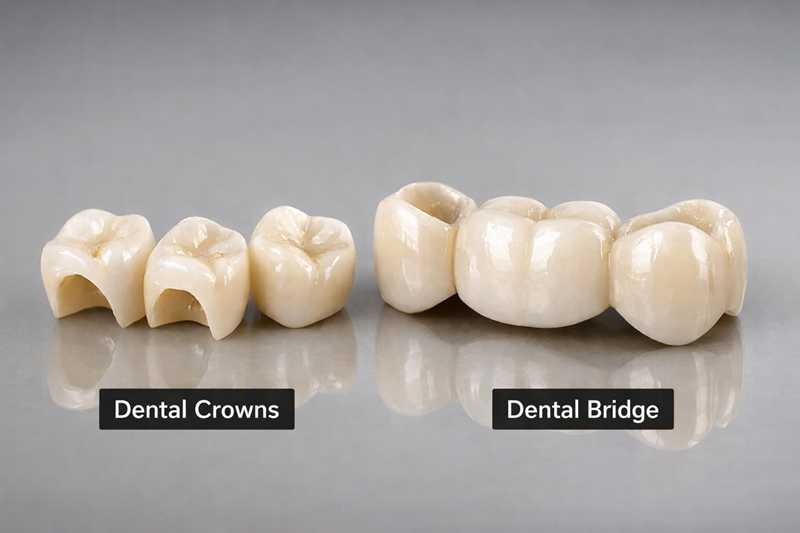
If you have a damaged or missing tooth, your dentist may discuss crowns and bridges as possible treatment options. While both are fixed restorations designed to restore function and appearance, they serve different purposes.
Understanding the difference between dental crowns vs bridges can help you feel more informed when discussing your treatment plan. Let’s explore how each option works, when they are recommended, and what to expect.
What Are Dental Crowns?
A dental crown is a custom-made cap that covers and protects a damaged or weakened tooth. It restores the tooth’s shape, strength and appearance while preserving the natural root.
When Is a Dental Crown Recommended?
A crown may be suitable if you have:
- A crown for broken tooth
- A large filling that weakens the remaining structure
- A tooth that has undergone root canal treatment
- Significant tooth wear from grinding (bruxism)
- A severely worn or cracked tooth
Crowns are designed to reinforce the existing tooth rather than replace it.
The Dental Crown Procedure
A dental crown procedure is usually completed over one or two appointments, depending on your tooth and the type of crown being made. The aim is to protect and strengthen the tooth while achieving a natural-looking result.
Here’s how it typically works:
- Assessment and planning
Your dentist examines the tooth, checks your bite, and may take X-rays if needed. - Tooth preparation
The tooth is reshaped to make room for the crown. If it’s badly worn or broken, it may be rebuilt first for support. - Scan/impression and shade matching
A digital scan or impression is taken so the crown fits precisely. Shade matching may be done to blend with nearby teeth. - Temporary crown (if required)
A temporary crown may be placed while the final crown is made. - Final fitting and cementing
The crown is checked for fit and bite, then bonded or cemented in place for comfort and function.
Modern dental crown materials (porcelain/ceramic) are chosen based on where the tooth sits in your mouth, your bite forces, and aesthetic needs. Some of the most well-known options today may include full porcelain/ceramic, zirconia, or porcelain-fused-to-metal.
What Is a Dental Bridge?
A dental bridge, on the other hand, is used to replace one or more missing teeth. It consists of an artificial tooth (or teeth) supported by neighbouring teeth, known as abutment teeth.
Unlike a crown, which covers a single existing tooth, a bridge spans a gap created by tooth loss.
When Is a Dental Bridge Recommended?
A bridge may be considered when:
- You are missing a single tooth, and adjacent teeth are present
- You prefer a fixed option rather than a removable appliance
- The neighbouring teeth would benefit from crowns
A bridge for one missing tooth typically uses the teeth on either side of the gap for support.
What many people forget, especially when they are missing a tooth, is that missing teeth can affect chewing efficiency, speech and alignment. This research shows that tooth loss was associated with changes in bite function and oral health-related quality of life.
The Dental Bridge Procedure: What to Expect
The dental bridge treatment is usually completed over two appointments, where the first one usually involves fitting for your permanent bridge.
Here’s what typically happens:
- Assessment and planning
Your dentist checks the gap, the health of the abutment teeth and gums, and your bite. X-rays may be taken if needed. - Preparing the abutment teeth
The teeth on either side of the space are gently shaped so they can support the bridge (similar to crown preparation). - Scans or impressions
A digital scan or impression is taken so the bridge can be custom-made to fit precisely. Shade matching may also be done. - Temporary bridge (if required)
A temporary may be placed to protect the teeth and maintain appearance while the final bridge is made. - Fit and cementing
The final bridge is tried in, adjusted for comfort and bite, then securely cemented in place.
Types Of Dental Bridges
- Traditional bridge: supported by crowns on both sides of the gap (most common).
- Cantilever bridge: supported on one side only (used in selected cases).
Crown vs Bridge: What’s the Difference?
Here is a simple breakdown of the crown vs bridge difference:
| Dental Crown | Dental Bridge |
| Covers and protects an existing tooth | Replaces one or more missing teeth |
| Restores strength and shape | Restores function and fills a gap |
| Requires one tooth to be prepared | Requires preparation of neighbouring abutment teeth |
| Used for damaged or weakened teeth | Used for missing tooth replacement options |
The key distinction is this:
- A dental crown protects a tooth that is still present.
- A dental bridge replaces a tooth that is no longer there
Which Option Is Right for You?
The choice between dental crowns vs bridges depends on whether the concern involves a damaged tooth or a missing one.
If you have a weakened but salvageable tooth, a crown may help restore its strength and protect it from further damage. If you have lost a tooth, a bridge may help restore chewing ability, maintain alignment and improve appearance.
However, it’s still best to consult first with a dentist to have your teeth checked. Your dentist will assess:
- Tooth structure
- Gum health
- Bite alignment
- Bone support
- Long-term maintenance considerations
Most of the time, the dentist will recommend a treatment that supports both function and long-term oral health to ensure you can smile, eat and speak well again.
Restoring Your Smile with Crowns and Bridges
If you’re dealing with a broken tooth or a missing tooth, you don’t have to guess which option is right. A personalised consultation can help clarify whether a dental crown or dental bridge suits your needs, based on your tooth structure, bite and long-term oral health.
If you’re considering getting crowns or bridges in Brunswick, VIC, Brunswick Dental Practice provides tailored treatment planning to determine whether a dental crown or dental bridge is appropriate for your situation.
Consult with our dentists today for a better assessment.
Frequently Asked Questions
What is the main difference between a dental crown and a dental bridge?
A dental crown covers and protects a tooth that is still present but weakened or damaged. A dental bridge replaces a missing tooth by anchoring to the neighbouring teeth (abutment teeth).
When would I need a dental crown?
A dental crown may be recommended for a broken or heavily worn tooth, a tooth with a large filling, or after root canal treatment—particularly when the tooth needs added strength and protection.
When would I need a dental bridge?
A dental bridge may be considered if you are missing one tooth (or more) and have healthy neighbouring teeth that can support the bridge. It’s a fixed option designed to restore function and fill the gap.
What are abutment teeth in a dental bridge?
Abutment teeth are the teeth next to the gap. They are prepared to support the bridge and help hold the replacement tooth securely in place.
What happens during a dental crown or bridge procedure?
Both treatments usually involve an assessment, tooth preparation, a scan or impression, and fitting the final restoration. A temporary crown or bridge may be used while the final one is being made.
What types of dental bridges are available?
Common dental bridge types include:
- Traditional bridges (supported by crowns on both sides)
- Cantilever bridges (supported on one side in selected cases)
Your dentist will recommend the most suitable option based on bite forces, location and tooth support.
How long do crowns and bridges last?
How long crowns and bridges last depends on oral hygiene, bite forces, material choice and regular dental check-ups. They can last for many years with appropriate care, but may need replacement over time.
Are crowns and bridges my only options for missing teeth?
Not always. Depending on your oral health, other missing tooth replacement options may include dental implants or removable partial dentures. A consultation helps determine what’s appropriate for your situation.