


Being told you have a badly damaged or infected tooth can leave you facing a big decision. Should you try to save it, or have it taken out? It’s a fair question, and the answer depends on your tooth, your health and your goals.
If you’re curious about root canal treatment and extraction, this article can help. We’ll compare root canal vs extraction so you can feel confident about your next steps. We’ll cover what each treatment involves, how recovery differs, and what may come after.
Root Canal or Extraction: How Is the Choice Made?
There’s no single answer that suits everyone. Our team at Brunswick Dental Practice starts with an examination and, where needed, an X-ray. This shows how deep the damage goes and how much healthy tooth is left.
Here are some things we consider:
- How far the infection or decay has spread
- Whether the tooth is cracked below the gum line
- How much natural tooth remains
- Your general health and any medicines you take
- Whether the tooth can be restored with a crown afterwards
Root canal treatment is often considered when a tooth can still be saved. Extraction may be considered when it can’t. A consultation is needed before any decision is made.
What a Root Canal Procedure Involves
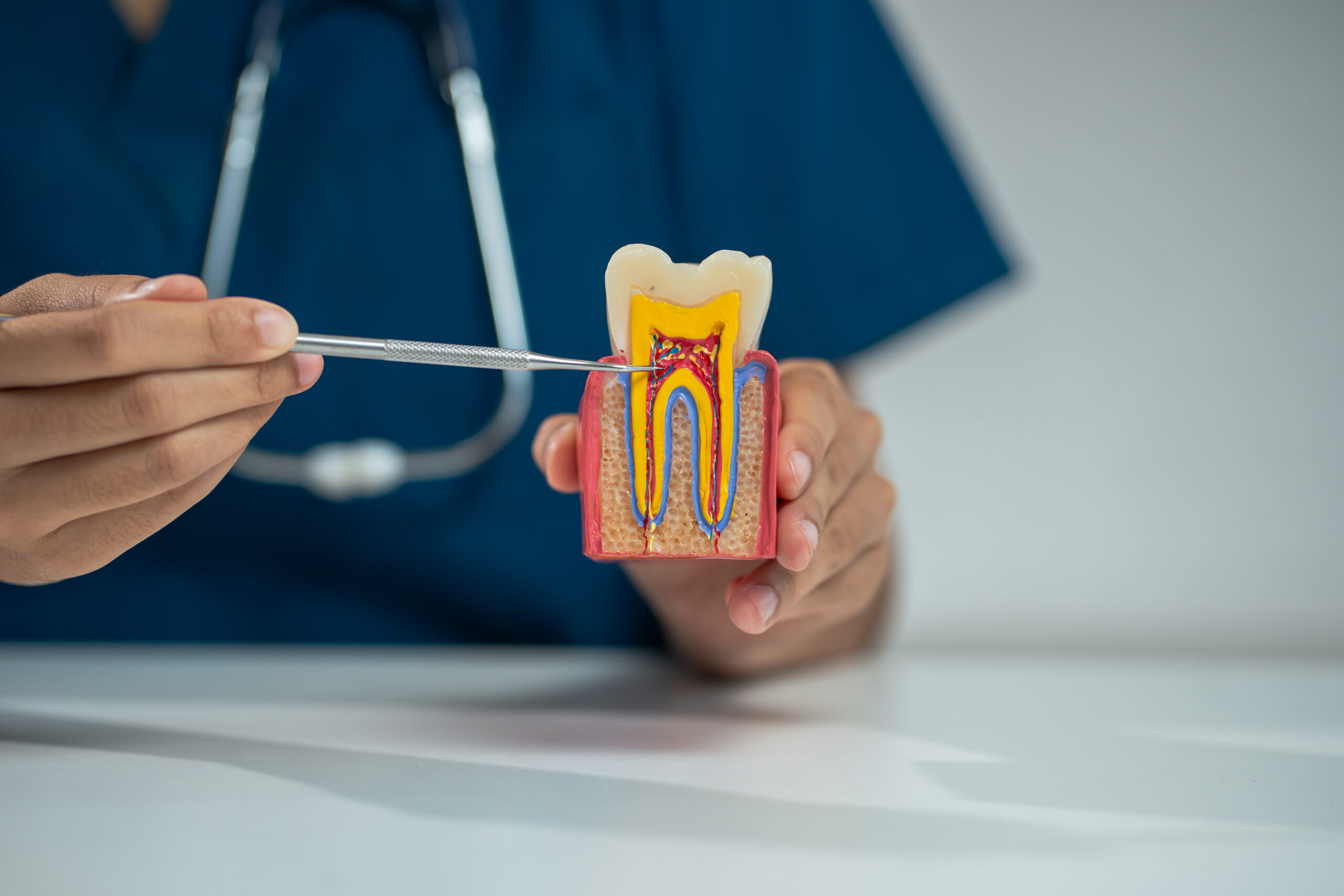
A root canal procedure treats infection inside the tooth. Every tooth has soft tissue in the centre called pulp, which holds nerves and blood vessels. When the pulp becomes infected, it may cause pain and swelling.
According to Healthdirect, root canal treatment can help save a tooth that is infected or damaged.
The steps usually look like this:
- Local anaesthetic numbs the area.
- A small opening is made in the tooth.
- The infected pulp is removed and the canals are cleaned.
- The canals are filled and sealed.
- A filling or crown is placed to protect the tooth.
Some cases need more than one appointment. In many cases, a crown is recommended to restore strength to the tooth.
What a Tooth Extraction Involves
During a tooth extraction, the whole tooth is removed from its socket using dental tools. Local anaesthetic is used to manage discomfort during the procedure. Some teeth may come out quickly, while others need a surgical approach.
The goal of the extraction is to remove the source of the problem, but it leaves a gap. Without a replacement, nearby teeth may drift, and the jawbone may change over time.
Tooth Extraction vs Root Canal at a Glance
This table shows how root canal vs extraction generally compare. Remember, your own case may still differ.
| Root canal | Extraction | |
| Natural tooth | Kept, usually with a crown | Removed |
| Appointments | Often more than one | Often one visit |
| Early recovery | Mild discomfort that often settles within a few days | The gum needs time to heal over the socket |
| What may follow | A crown, or retreatment in some cases | A replacement tooth may be considered |
| Things to weigh up | Infection may return in some cases | A gap, and nearby teeth may shift |
Related: What Happens If You Delay Root Canal Treatment?
Recovery: What to Expect Afterwards
Root canal recovery is often a quick procedure to do, depending on your case. Once it is done, you may feel some soreness for a few days. If you partner with us, our team will advise on pain relief and when to resume normal activities.
Tooth extraction recovery usually takes a little longer, as the gum heals over the socket. Initial healing often takes about 1 to 2 weeks. Following your aftercare instructions is important to help lower the risk of problems, such as dry socket.
Root Canal vs Implant: What Comes After an Extraction?
These two options solve different problems. A root canal aims to keep your natural tooth, while a dental implant replaces a tooth that has been removed.
If a tooth can’t be saved, you may wish to replace it with an implant, a bridge or a denture. Suitability would still depend on your bone, gums and goals, so an assessment is needed first.
When to Book an Assessment
A damaged tooth doesn’t always cause pain at first. You may notice:
- Toothache or sensitivity to hot and cold
- A pimple-like bump on the gum near the tooth
- Swelling in the gum or jaw
- A tooth that is getting darker in colour
If you have severe pain or swelling, contact us promptly. If you have trouble breathing or swallowing, go to your nearest hospital emergency department or call 000.
Making a Confident Choice for Your Tooth
Choosing between root canal vs extraction can feel overwhelming, especially when you’re in discomfort. Both options may help relieve pain from a damaged tooth, and the right one depends on your individual situation. Knowing what each involves may help you ask the right questions.
If you’re facing this decision, root canal treatment in Brunswick may be one option to discuss. A consultation will help us explain whether it may suit you. For patients in and near Brunswick, VIC, you can book online or call us on (03) 9386 7981.
Frequently Asked Questions
Is a Root Canal More Painful Than an Extraction?
Local anaesthetic is used for both to manage discomfort during treatment. However, after your procedure, you may feel some soreness with either option. Our team will explain how to manage this.
Can a Root Canal Fail?
Sometimes. A tooth may become infected again, and retreatment or extraction may then be discussed. This is why following your dentist’s orders during recovery is important. Regular check-ups also help us keep an eye on the tooth.
Do I Need a Crown After a Root Canal?
In many cases, yes, particularly for back teeth. A crown may help protect and strengthen the tooth. Our team will advise what suits your situation.
What Happens If I Do Nothing?
The infection may spread and cause pain or swelling, and the tooth may eventually need to be removed. Early assessment may give you more options to discuss.