


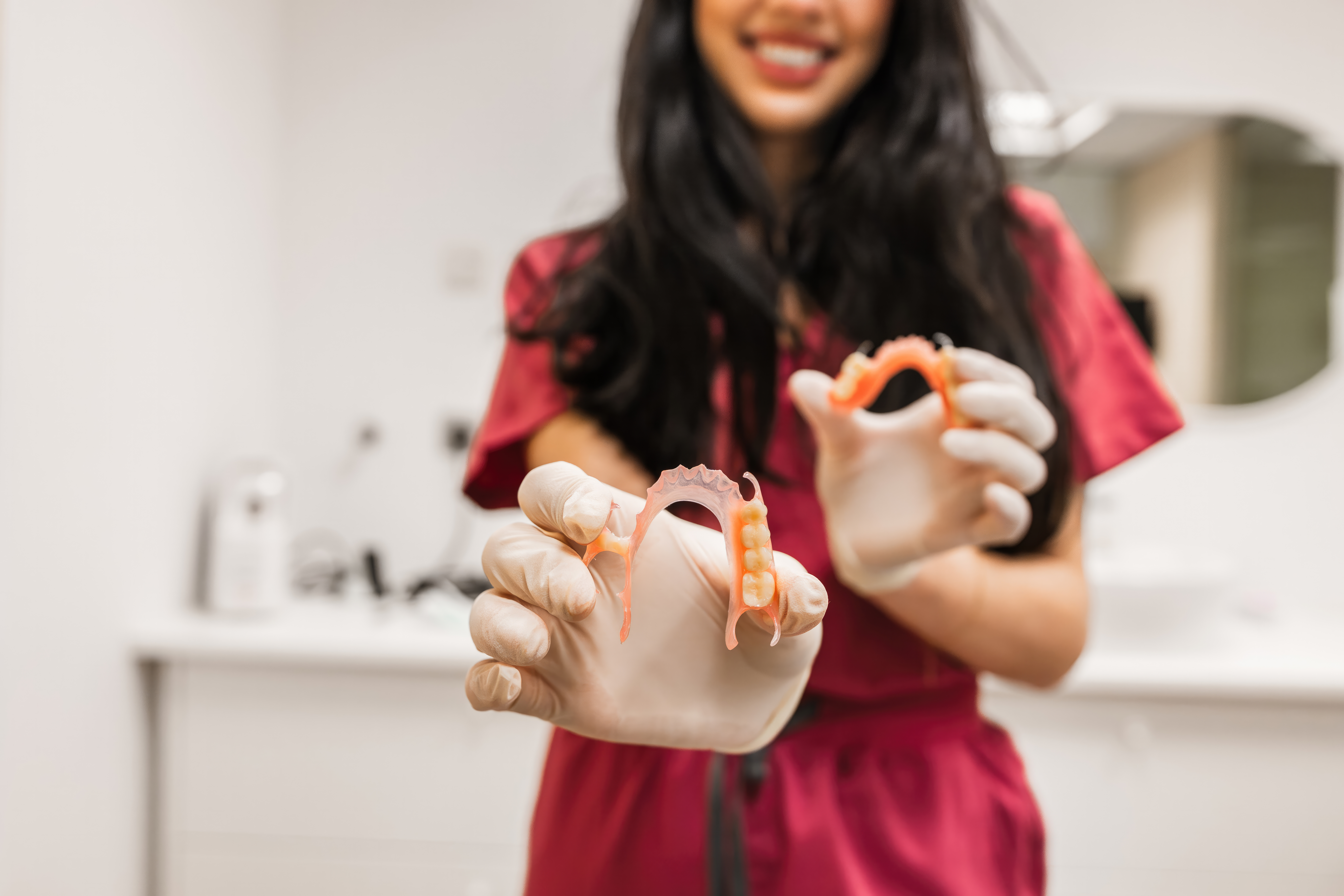
Dentures have come a long way from the one-size-fits-most options many people picture. Today, there’s a genuine range of designs, from removable full sets to slim partials, flexible materials, and implant-supported options.
Choosing between them isn’t just about how they look. It’s about what fits your mouth, your daily routine, and the way you’d like to eat, speak, and feel over time. Understanding the different kinds of dentures available is often the first step toward a clearer conversation with your dentist.
In this article, we’ll walk through the main options, what they typically involve, and the factors that may help you decide which one suits you.
What Are Dentures?
Dentures are removable replacements for missing teeth and the surrounding gum tissue. Modern designs are made from materials like acrylic, metal, and flexible resins, each shaped to sit comfortably against your gums.
Learn more about dentures through our beginner’s guide to dentures, which covers the basics of how they work and what to expect.
There are various types of dentures available today. Let’s look at each one of them.
Types of Dentures
Full Dentures
Full dentures, also known as complete dentures, are used when all the teeth in the upper or lower jaw are missing. They rest directly on the gums and are carefully shaped to fit the contours of your mouth, restoring both function and appearance.
Complete dentures vs partial dentures only differ mainly in how much of the arch they replace.
Full dentures may be recommended when:
- All teeth in an arch have been lost or need to be removed
- Remaining teeth are no longer healthy enough to be maintained
- A stable, uniform replacement is preferred across the arch
- Denture adhesive may be used for additional stability when helpful
Partial Dentures
Partial dentures are used when some healthy natural teeth remain. They fill in the gaps created by missing teeth and are typically supported by a metal or acrylic framework that attaches to existing teeth.
Partial dentures help:
- Prevent remaining teeth from shifting into empty spaces
- Restore chewing balance across the arch
- Maintain facial structure and support
- Fill visible gaps in a natural-looking way
Different forms of partial dentures include:
- Acrylic dentures, valued for their lightweight design and adaptability
- Chrome cobalt partial dentures, which are thinner and often more durable
- Upper partial dentures, designed to replace missing teeth on the top arch
- Lower partial dentures for the bottom arch, sometimes with a metal bar for support
Your dentist will assess your gum health and remaining teeth before recommending a partial denture.
Flexible Dentures
Flexible dentures are made from a soft, lightweight thermoplastic material rather than traditional rigid acrylic. They tend to be more discreet because they don’t require visible metal clasps to hold them in place.
Key features of flexible dentures:
- Comfortable fit that adapts to the contours of the gums
- Lightweight and thin compared to conventional acrylic dentures
- No visible metal clasps, giving a more natural appearance
- Well suited to smaller partial replacements
They may not suit every situation, but for some patients they offer an appealing balance of comfort and aesthetics.
Implant-Supported Dentures
Implant-supported dentures combine the stability of dental implants with the convenience of a removable prosthesis. Rather than resting on the gums alone, they snap onto a small number of implants placed in the jawbone.
Benefits often include:
- Improved stability during eating and speaking
- Less reliance on denture adhesive
- Reduced pressure on the gums compared to conventional dentures
- May help preserve jawbone in the area supported by implants
They can be a suitable option for patients who want more security than traditional dentures without needing a full set of individual implants.
Immediate Dentures
Immediate dentures are placed on the same day that your remaining teeth are removed, so you don’t have to go without teeth during the healing period. They’re often used as a temporary or transitional option, and adjustments are typically needed as the gums heal and change shape over the following months.
The Cost of Dentures
The types of dentures and cost vary based on the material, design, and complexity of the case. As a general guide:
- Basic acrylic dentures — the most affordable option upfront
- Chrome cobalt partial dentures — mid-range, valued for durability
- Flexible dentures — mid-to-higher range depending on size
- Implant-supported dentures — the highest upfront cost due to the surgical component
- Immediate dentures — cost varies based on materials and follow-up adjustments
Long-term costs can also include relining, repairs, and eventual replacement. If you’re also curious about how long do dentures last, it usually varies by type, but most conventional dentures last 5 to 10 years, while implant-supported options often last longer with proper care.
However, the lifespan of dentures still depends on several factors. A consultation is required to provide an accurate estimate based on your individual situation.
Dentures vs Implants: Which May Suit You?
The dentures vs implants decision comes down to more than cost. Dentures are removable, more affordable upfront, and generally quicker to fit, while dental implants are fixed, surgically placed, and may help preserve jawbone over time.
Some patients find that a combination, such as implant-supported dentures, offers a helpful middle ground. Still, that would depend if the dentist see that the patient is deemed fit for it.
What Type of Denture Is Best for Me?
The honest answer to that is it depends on several factors:
- How many teeth are being replaced
- The health of your gums and jawbone
- Your lifestyle and daily routine
- Comfort and aesthetic preferences
- Your budget and long-term goals
Every mouth is different, and the right choice usually becomes clearer after an individual assessment with your dentist.
Find the Denture Option That Fits Your Smile
With so many options available, choosing the right type of denture can feel like a lot to weigh up on your own. If you’re considering dentures or would like a clearer sense of which option may suit you, it may be best to talk to a dentist about it.
If you’d like to explore your options, checking in with a dentist is often the clearest next step. Learn more from our dentists at Brunswick Dental Practice for patients in and near Brunswick, VIC.
Book a consultation with our team to discuss your concerns and know your options.
Frequently Asked Questions
Are dentures comfortable to wear?
Modern dentures are generally more comfortable than older designs, though most patients need a short adjustment period after fitting. Any persistent discomfort or sore spots should be reviewed by your dentist so the fit can be refined.
How often do dentures need to be replaced?
Most conventional dentures last around 5 to 10 years, though the exact lifespan depends on the type, material, and how well they’re cared for. Regular check-ups allow your dentist to monitor fit and identify when a reline or replacement may be needed.
Do I need to use denture adhesive?
Denture adhesive isn’t required for every patient. Well-fitted dentures often stay in place through suction alone. Adhesive can offer extra security for some, particularly with lower dentures or in social situations.
Should I see a denturist or dentist for dentures?
Both can provide dentures, though a dentist is often the preferred choice for patients with existing dental concerns, complex cases, or when implant-supported options are being considered.
A general dentist can also coordinate ongoing oral health care alongside your dentures.