


It’s not uncommon to put off a dental appointment when root canal treatment is mentioned. If the pain has temporarily settled, it can feel easy to wait and see.
Unfortunately, a tooth infection does not resolve on its own, and in most cases, delaying treatment means the situation becomes more complex and more costly to manage down the line.
Understanding what happens when root canal therapy is delayed can help you make an informed decision about your care.
In this article, we will walk through what the procedure involves, what signs to look out for, and why acting sooner almost always leads to a better outcome.
What Is Root Canal Treatment?
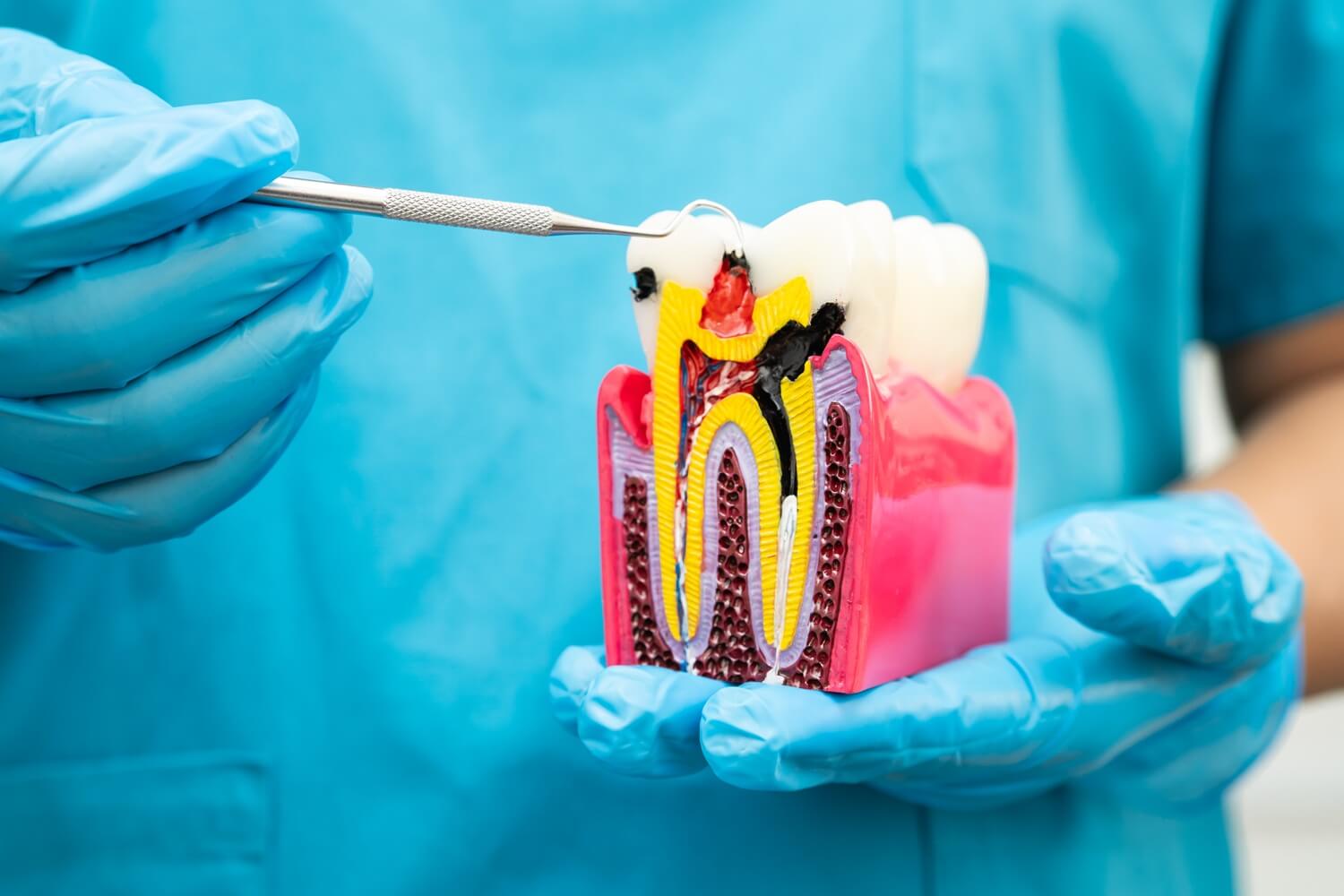
Root canal treatment is a procedure used to manage infection or inflammation within the pulp, which is the soft inner tissue of a tooth that contains nerves and blood vessels.
When bacteria reach this tissue through deep decay, a crack, or a failing restoration, a dental pulp infection develops that the body cannot clear on its own.
Root canal therapy involves removing the infected tissue, cleaning and shaping the internal canals, and sealing the tooth to prevent re-infection. A crown is often placed afterwards to restore the tooth’s strength and function.
As we cover in our article on common dental problems caught early, decay that goes untreated is one of the most common pathways to needing a root canal procedure. Catching and treating problems early is almost always the simpler, less invasive path.
Infected Tooth Symptoms to Watch For
Some teeth requiring root canal treatment have no obvious symptoms initially, which is why regular check-ups and X-rays play such an important role. When signs do appear, common infected tooth symptoms include:
- Persistent or worsening toothache, especially when biting or applying pressure
- Prolonged sensitivity to hot or cold that lingers after the stimulus is removed
- Swelling in gums or face near the affected tooth
- A pimple-like bump on the gum, which may indicate a developing tooth abscess
- Darkening of the affected tooth
- A bad taste or persistent smell that doesn’t resolve with brushing
One point worth understanding: a temporary easing of pain does not mean the infection has cleared. In some cases, it may indicate that the nerve tissue has died, while the infection continues to spread silently into the surrounding bone and tissue.
What Can Happen When Root Canal Treatment Is Delayed
The infection can spread
A root canal infection that remains untreated can spread beyond the root tip into the surrounding bone and soft tissue, leading to a dental abscess. According to Healthdirect, a dental abscess will not resolve without treatment and is likely to worsen over time.
In more serious cases, the spread of dental infection to the jaw, neck, or surrounding structures can become a medical emergency requiring hospital care.
The tooth may be lost
The longer root canal treatment is delayed, the more damage accumulates to the surrounding bone and tooth structure. At a certain point, the tooth may no longer be salvageable through root canal procedure alone, making extraction the only remaining option.
When considering root canal vs tooth extraction, preserving the natural tooth is almost always the preferred clinical approach. Losing a tooth carries its own long-term consequences, including jawbone loss, shifting of adjacent teeth, and the potential need for a replacement, such as a dental implant or bridge.
Treatment becomes more complex
A root canal infection addressed in its earlier stages is generally more straightforward to treat than one that has been left to progress. Delayed treatment may require additional procedures, a longer recovery period, and, in some cases, referral to a specialist.
Acting on worsening toothache signs early gives your root canal dentist the best opportunity to save the tooth with the least intervention and the most predictable outcome.
What About Antibiotics?
A common question patients ask is whether antibiotics can resolve a tooth infection without the need for a root canal.
While antibiotics may reduce acute symptoms and help limit the spread of infection temporarily, the limits of antibiotics and tooth infection management are well established clinically. They do not remove the source of the problem.
Without root canal therapy to address this directly, the infection is likely to return once the course of antibiotics ends. Antibiotics are sometimes prescribed alongside root canal treatment to support the process, but not as a replacement for it.
Reminder: Taking unprescribed antibiotics is also not allowed. It’s best to ask for guidance from a dentist or specialist.
When to Seek Urgent Care
If you experience significant swelling in gums or face that is increasing, difficulty swallowing or opening your mouth, fever alongside dental pain, or severe pain that is not responding to over-the-counter relief, seek care promptly rather than waiting for a routine appointment. These may be signs that the infection is spreading beyond the tooth.
Also, if you are in need of urgent dental care, Brunswick Dental Practice also offers dental emergency services outside of regular hours.
Protect Your Tooth Before It’s Too Late
Delaying root canal treatment rarely makes the situation easier, and in many cases, it reduces the options available. If you’ve been told you may need root canal therapy, or are experiencing any of the symptoms described above, the most important step is to get the tooth assessed as soon as possible.
If you’re in Brunswick, VIC, our team at Brunswick Dental Practice will thoroughly assess the tooth, explain your options clearly, and support you through every step of the process.
Have a consultation with our dental team right away. The sooner we look at it, the more we can do.
Frequently Asked Questions
Can a tooth infection go away on its own?
No. Even if pain eases temporarily, the infection continues to progress and may spread to the surrounding bone and tissue. Treatment is always required.
Can antibiotics cure a tooth infection?
No. Antibiotics may reduce symptoms temporarily, but do not remove the infected tissue. Without root canal therapy, the infection is likely to return once the course ends.
Is root canal treatment painful?
The procedure is performed under local anaesthesia and should not be painful. Most patients find the discomfort from the infection beforehand far greater than the treatment itself.
How do I know if I need a root canal?
Common signs include a persistent toothache, prolonged temperature sensitivity, gum swelling, and a pimple-like bump near the tooth. Some cases have no symptoms at all, which is why regular check-ups matter.
What happens if I choose extraction instead?
Extraction removes the infection but results in tooth loss, which can lead to bone loss and shifting of surrounding teeth. Your dentist will walk you through both options so you can make an informed decision.